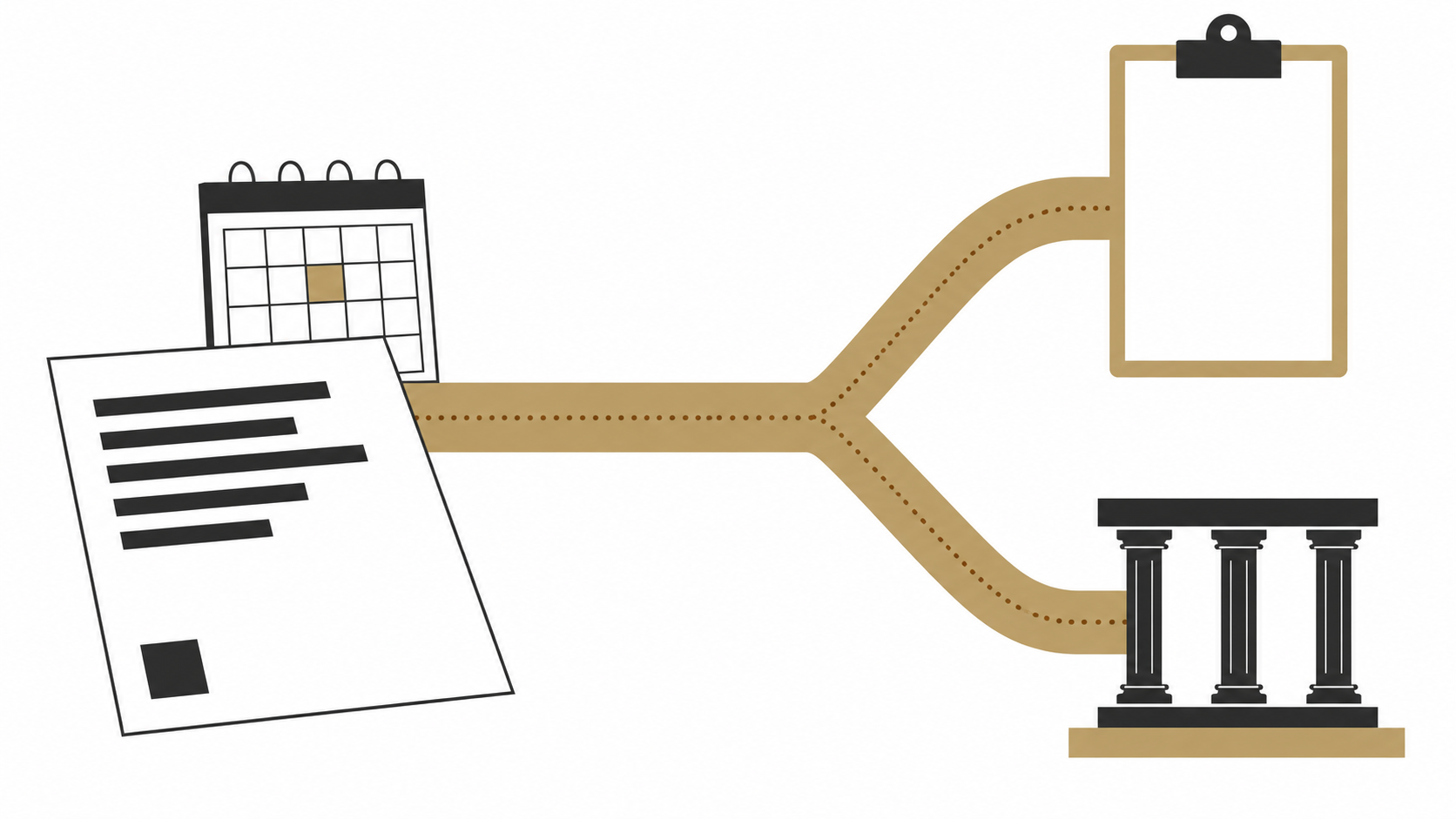
To get a restraining order in Louisiana, you file a petition at your parish courthouse, appear before a judge who may issue a temporary order, ensure the defendant is served by the sheriff, and attend a contradictory hearing where the judge decides whether to grant a long-term protective order. The entire process typically takes 21 days from filing to final hearing.
At Melancon, Rimes & Daquanno, we have spent 20 years guiding Baton Rouge families through Louisiana’s protective order system. The process is designed to provide immediate protection for victims of domestic violence, dating violence, stalking, or sexual assault. While you can file on your own, having an attorney can strengthen your case and ensure you receive the maximum protection available under Louisiana law.
This guide explains everything you need to know about getting a restraining order in Louisiana, from eligibility requirements to what happens if someone violates the order.
Understanding Protective Orders in Louisiana
Louisiana uses the term “protective order” rather than “restraining order.” These court orders prohibit someone from contacting you, coming near you, or engaging in abusive behavior. The Louisiana Legislature created these protections specifically because domestic violence crimes were historically treated less seriously than violence between strangers.
The state maintains the Louisiana Protective Order Registry (LPOR), a central database that makes these orders enforceable across all parishes. As of 2024, Louisiana had 30,785 active civil and criminal protective orders in the registry.
Types of Protective Orders Available
Louisiana offers several types of orders depending on your situation:
| Order Type | Duration | Purpose |
| Temporary Restraining Order (TRO) | Up to 21 days | Emergency protection granted immediately without the defendant present |
| Protective Order (PO) | Up to 18 months | Long-term protection after both parties present evidence at a hearing |
| Criminal Order of Protection | Tied to criminal case | Issued as a condition of bail or sentencing in criminal domestic violence cases |
| Injunction Against Abuse | Duration of divorce/separation | Granted during divorce proceedings to prevent further harm |
The Temporary Restraining Order provides immediate protection while you wait for your full hearing. The Protective Order is the long-term solution that can last up to 18 months and be extended in extreme cases.
Who Can Get a Restraining Order in Louisiana?
Your relationship to the abuser determines which type of protective order you can file for.
You can file under the Domestic Abuse Assistance Act if the abuser is:
- Your current or former spouse
- A parent, child, stepparent, or stepchild
- A grandparent or grandchild
- Someone who currently or formerly lived with you in a sexual or intimate relationship
You can file under the Protection from Dating Violence Act if:
- You’re in or were in a dating relationship with the person
- The relationship involved an expectation of affectionate involvement
- Casual social or business associations don’t qualify
You can file under the Protection from Stalking Act or Protection for Victims of Sexual Assault Act if:
- The person stalked you or sexually assaulted you
- No intimate relationship exists between you
Louisiana law defines “domestic abuse” as physical or sexual abuse and any offense against the person, including battery, assault, or kidnapping. The abuse doesn’t have to have already occurred. Courts can issue orders to prevent the “threat, danger, or possibility of abuse.”
The Step-by-Step Process for Getting a Restraining Order
Step 1: Prepare and File Your Petition
You start by filing a “Petition for Protection from Abuse” at your parish courthouse. The Louisiana Supreme Court created standardized forms to make this process consistent across the state.
Which form you need:
- LPOR-B: Domestic or dating violence allegations
- LPOR-D: Stalking or sexual assault by a stranger or acquaintance
- LPOR-C: Filed on behalf of a minor child
- LPOR-F: Keeps your address private from the abuser
- LPOR-H: Provides the sheriff with the abuser’s location for service
You can file in any parish where:
- The marital or shared home is located
- You currently reside
- The defendant resides
- The abuse occurred
For example, if you live in Denham Springs, Zachary, Central, Port Allen, St. George, or Baker, you can file in your local courthouse.
The petition requires an affidavit describing recent incidents of violence. Use specific, descriptive language like “choked,” “slapped,” or “threatened with a weapon.” You must sign the form in front of a notary or court clerk with valid photo identification.
There is no filing fee for protective orders in Louisiana.
Step 2: Judicial Review and Temporary Restraining Order (TRO)
After you file, a judge immediately reviews your petition. If it shows “immediate and present danger of abuse,” the judge can issue a Temporary Restraining Order without the abuser being present or notified. This ex parte order provides emergency protection while you wait for the full hearing.
The judge considers your entire history of abuse or threats. The violence doesn’t need to be recent to justify a TRO.
If the judge grants a TRO, it’s valid for up to 21 days. If the judge doesn’t grant a TRO but believes a hearing is warranted, they’ll schedule the hearing without issuing the temporary order.
Step 3: Service of Process
The protective order isn’t legally enforceable until the defendant has been “served” by the parish sheriff. Service means the sheriff officially notifies the defendant about the order and the hearing date.
The sheriff typically has five attempts within the first ten days. You should provide the sheriff with:
- A recent photograph of the defendant
- Their work schedule and hours
- Secondary addresses where they might be found
- Any other information that helps locate them
If the defendant isn’t served by the hearing date, you must request a “continuance,” which reschedules the hearing and extends the TRO.
Step 4: The Court Hearing
The hearing is where a judge decides whether to grant a long-term protective order. Both you and the defendant have the right to:
- Be present
- Testify
- Call witnesses
- Present evidence
The standard of proof is “preponderance of the evidence,” meaning the judge must find it more likely than not that the abuse occurred or is threatened.
If you fail to attend the hearing, the TRO expires and your case is dismissed. If the defendant fails to appear after being served, the judge may grant the protective order in their absence if you meet the burden of proof.
Step 5: Final Protective Order
If the judge grants your protective order, it’s typically valid for up to 18 months. In extreme cases, it can be extended or made permanent. The order is immediately entered into the Louisiana Protective Order Registry, making it enforceable statewide.
What Evidence Do You Need for a Restraining Order?
Strong evidence strengthens your case at the hearing. In our experience, judges respond most favorably to contemporaneous documentation like text messages with timestamps and photos of injuries taken immediately after incidents. Louisiana courts accept several types of evidence:
Digital Evidence:
- Text messages showing threats or harassment
- Social media posts or messages
- Voicemails or recorded phone calls
- Email communications
Print digital evidence or record it on a device the court can keep. Cell phones are often prohibited in courtrooms.
Physical Evidence:
- Photos of injuries
- Photos of damaged property
- Medical records documenting injuries
- Police reports from domestic violence incidents
Witnesses:
- Anyone who saw or heard the abuse
- Friends or family members who observed threatening behavior
- Law enforcement officers who responded to incidents
You can request subpoenas from the clerk of court to compel witnesses to attend the hearing.
What Can a Protective Order Require?
Louisiana judges have broad authority to grant any provision necessary to protect you and your children. The court can order:
| Protection Type | What It Means |
| Stay-away orders | Prohibits the defendant from your home, school, workplace, or other locations |
| No-contact orders | Bans all communication, including phone calls, texts, emails, and social media |
| Exclusive use of residence | Gives you sole possession of a shared home, effectively evicting the abuser (regardless of whose name is on the lease or title) |
| Temporary custody | Awards you custody of minor children with restricted or supervised visitation for the defendant |
| Financial support | Orders interim spousal support, child support, or use of community vehicles |
| Property protection | Prohibits transfer or disposal of jointly owned property |
| Return of personal property | Requires return of your identification documents, medications, phones, computers, and other belongings |
The court’s primary concern is your safety and the safety of your children. Judges can customize orders to fit your specific situation.
Firearm Restrictions and Protective Orders
Louisiana and federal law prohibit defendants from possessing firearms if the protective order:
- Includes a finding that the defendant represents a “credible threat to the physical safety” of a family member, household member, or dating partner
- Informs the person they’re prohibited from possessing firearms under state and federal law
Most protective orders issued on Louisiana’s standardized forms automatically trigger this prohibition because they include boilerplate findings of “immediate and present danger.”
The defendant must:
- Declare in court or by affidavit the number and location of all firearms they possess
- Transfer all firearms to the sheriff within 48 hours of the order (or 48 hours after release from jail)
- File proof of transfer with the clerk of court within 10 days
- File a “Declaration of Non-Possession” if they own no firearms
Failure to comply with firearm divestment requirements is punishable as contempt of court.
How Long Does a Protective Order Last?
A Temporary Restraining Order lasts up to 21 days until the hearing date.
A final Protective Order is generally valid for up to 18 months. The court can extend this period or make it permanent in extreme cases involving severe violence or credible ongoing threats.
Criminal protective orders last for the duration of the criminal case, bail period, or probation.
What Happens If Someone Violates a Restraining Order?
Violating a protective order is a criminal offense in Louisiana. “Violation” means the “willful disobedience” of any provision in the order.
Law enforcement officers must use “every reasonable means,” including immediate arrest, to enforce protective orders. A violation remains a crime even if you invited the defendant to contact you. The order is a mandate from the court to the defendant, and only the court can change it.
Penalties for violations:
| Conviction | Penalties (No Battery) | Penalties (With Battery or Firearm) |
| 1st Conviction | Up to $500 fine and/or 6 months in jail | $300-$1,000 fine and 30 days to 6 months in jail (at least 48 hours must be served) |
| 2nd Conviction | Up to $1,000 fine and 48 hours to 6 months in jail | $750-$1,000 fine and 14 days to 2 years in jail (at least 14 days must be served) |
| 3rd+ Conviction | Up to $1,000 fine and 14 days to 2 years in jail | 1 to 5 years in prison (at least 1 year must be served) |
If the violation involves going to your home, school, or workplace while possessing a firearm, the mandatory minimum sentence is 30 days for a first offense and one year for repeat offenders.
Getting Help and Legal Resources
You don’t have to navigate this process alone. Several organizations provide free support to protective order petitioners in Louisiana:
Statewide Resources:
- Louisiana Coalition Against Domestic Violence: 24-hour hotline at 1-888-411-1333
- Louisiana LawHelp: Free legal information and automated forms
- Louisiana Civil Legal Navigator: Online petition assistance
Local Programs:
- New Orleans Family Justice Center (Orleans Parish): 504-866-9554
- Iris Domestic Violence Center (East Baton Rouge, Ascension, Livingston parishes): 800-541-9706
- Faith House (Lafayette, Rapides parishes): 337-232-8954
- Metro Centers for Community Advocacy (Jefferson, St. Charles parishes): 504-837-5400
Legal aid organizations like Acadiana Legal Service Corporation and Southeast Louisiana Legal Services provide free representation for economically disadvantaged victims.
When to Consider Hiring an Attorney
While Louisiana’s standardized forms allow you to file for a protective order on your own, an attorney can provide advantages in several situations.
An attorney can prepare more detailed petitions with precise legal language that addresses all relevant statutes. They know what evidence judges in your parish find most persuasive and how to present it effectively. During the hearing, an attorney can cross-examine the defendant and their witnesses, challenging their testimony and credibility.
Attorneys can also request the full range of relief available under Louisiana law. This includes not just the stay-away order, but also temporary custody arrangements, financial support, property protections, and exclusive use of the home. These additional protections often make the difference between a protective order that truly secures your safety and one that leaves gaps.
If your case involves children, complex property issues, or if you expect the defendant to contest the order vigorously, legal representation becomes particularly valuable.
If you’re facing domestic violence, stalking, or threats, don’t wait to take action. At Melancon, Rimes & Daquanno, we handle family law matters including protective orders, divorce, child custody, and restraining orders throughout the greater Baton Rouge area. We understand that family law matters are emotionally challenging, and we provide caring, professional guidance through these difficult situations.
Contact our Baton Rouge office at (225) 303-0455 for a free consultation. We can evaluate your situation, explain your options, and help you take the necessary legal steps to protect yourself and your family.