A fatal car accident in Louisiana creates specific legal rights for surviving family members. If you’ve lost a loved one due to someone else’s negligence, Louisiana law allows you to pursue compensation through a wrongful death claim and, in most cases, a separate survival action. Filing requires identifying the correct claimants, meeting strict deadlines, and building a case supported by the right evidence.
At Melancon, Rimes & Daquanno, we’ve represented families through wrongful death cases for nearly 20 years, including securing a $3.5 million settlement in federal court for the family of a woman killed by a speeding dump truck. This guide covers the full process of filing a wrongful death claim in Louisiana, from who qualifies to the damages you may recover.
Wrongful Death vs. Survival Action: Two Separate Claims
One of the most misunderstood parts of Louisiana fatal accident cases is that they typically involve two distinct civil claims filed together.
A wrongful death action compensates surviving family members for their own losses caused by the death. These are your losses: the absence of your loved one’s companionship, their financial support, and the grief you carry going forward.
A survival action compensates for the damages the deceased person suffered between the moment of injury and the moment of death. Survivors effectively step into the shoes of the deceased to recover what that person would have been entitled to, including pain and suffering and medical expenses incurred before death.
Louisiana courts have consistently held that these are separate and distinct claims. They arise at different times, compensate different injuries, and follow their own procedural rules under La. Civil Code art. 2315.2 (wrongful death) and La. Civil Code art. 2315.1 (survival action).
| Wrongful Death Action | Survival Action | |
| Who is compensated | Surviving family members | The deceased (through survivors) |
| What it covers | Survivors’ losses from the death forward | Decedent’s damages from injury until death |
| When it arises | At the moment of death | At the moment of injury, transmitted at death |
| Key statute | La. Civ. Code art. 2315.2 | La. Civ. Code art. 2315.1 |
Who Can File a Wrongful Death Claim in Louisiana?
Louisiana uses a strict priority system. If a higher-priority class of survivors exists, lower-priority classes cannot file. The statutory order is:
- Surviving spouse and/or children (including adopted children)
- Surviving parents (only if no surviving spouse or children)
- Surviving siblings (only if no spouse, children, or parents)
- Surviving grandparents (only if none of the above)
The survival action follows a similar class structure but adds one important option: if no listed beneficiary class exists, a succession representative can pursue the survival claim. This sometimes requires opening a succession (Louisiana’s term for probate) and appointing a representative, which adds procedural steps and time.
Identifying the correct claimants early matters. Issues like estrangement, adoption, or prior marriages can affect who qualifies under the statute.
What Are the Deadlines for Filing?
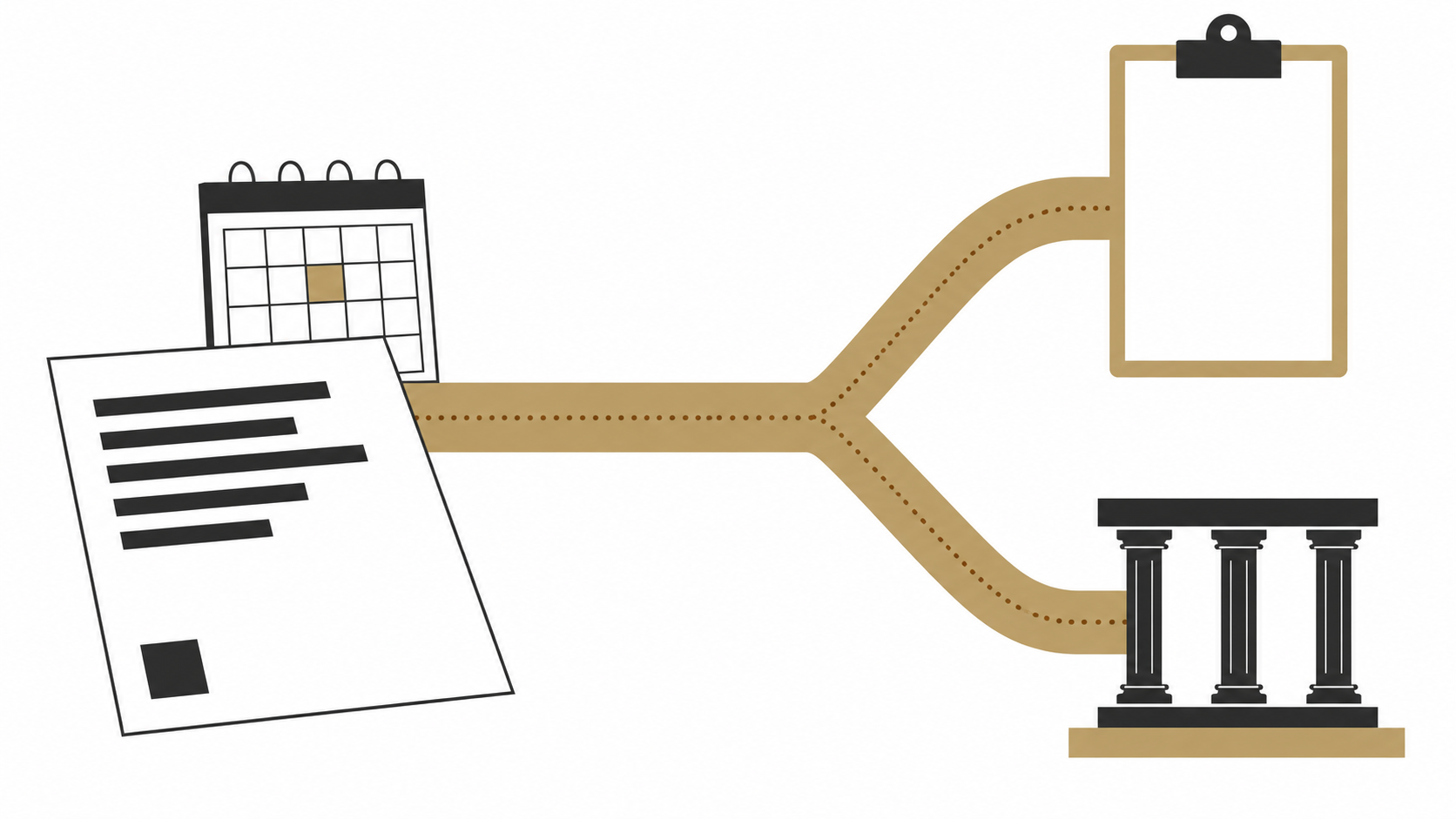
Missing a filing deadline can permanently bar your claim. Louisiana’s prescriptive periods (the state’s term for statutes of limitations) for wrongful death and survival actions are set by statute.
For both claims, the deadline is the longer of:
- One year from the date of death, or
- Two years from the date the injury or damage was sustained
In most fatal car accidents, the death occurs on the same day as the crash. That effectively gives you two years from the accident date. But in cases where a victim survives for a period before dying from their injuries, these two timelines can diverge. The longer period applies.
For general tort claims related to the accident beyond the wrongful death and survival actions, La. Civil Code art. 3493.1 sets a two-year prescriptive period from the date injury or damage is sustained.
The 90-Day Service Requirement
Filing the lawsuit doesn’t end your timing obligations. Under La. Code of Civil Procedure art. 1201(C), you must request service of citation on all named defendants within 90 days of filing. Failing to request service in time can lead to dismissal and prescription complications, particularly when a government entity is involved.
What Evidence Do You Need for a Wrongful Death Claim?
The strength of a wrongful death case depends on what you can prove. Evidence collection should begin immediately after the crash.
Records You’ll Need
Police crash report and investigative files. These establish how the wreck happened. Louisiana State Police crash reports can be ordered online for $11.50 per report, and reports are retained for up to five years.
Death certificate. Required for insurance claims, court filings, and succession-related steps. Louisiana is a closed record state for death certificates, meaning requests must include proper identification, fees, and a completed application through the Louisiana Department of Health.
Medical records and bills. These connect the crash to the death and support both survival damages (pre-death medical costs and pain) and certain wrongful death damages.
Employment and income documentation. Important for establishing loss-of-support damages, particularly when the case involves a government defendant subject to statutory damage caps.
Immediate Steps After a Fatal Accident
The Louisiana Department of Insurance’s Consumer’s Guide to Auto Insurance recommends the following after any car accident:
- Call 911
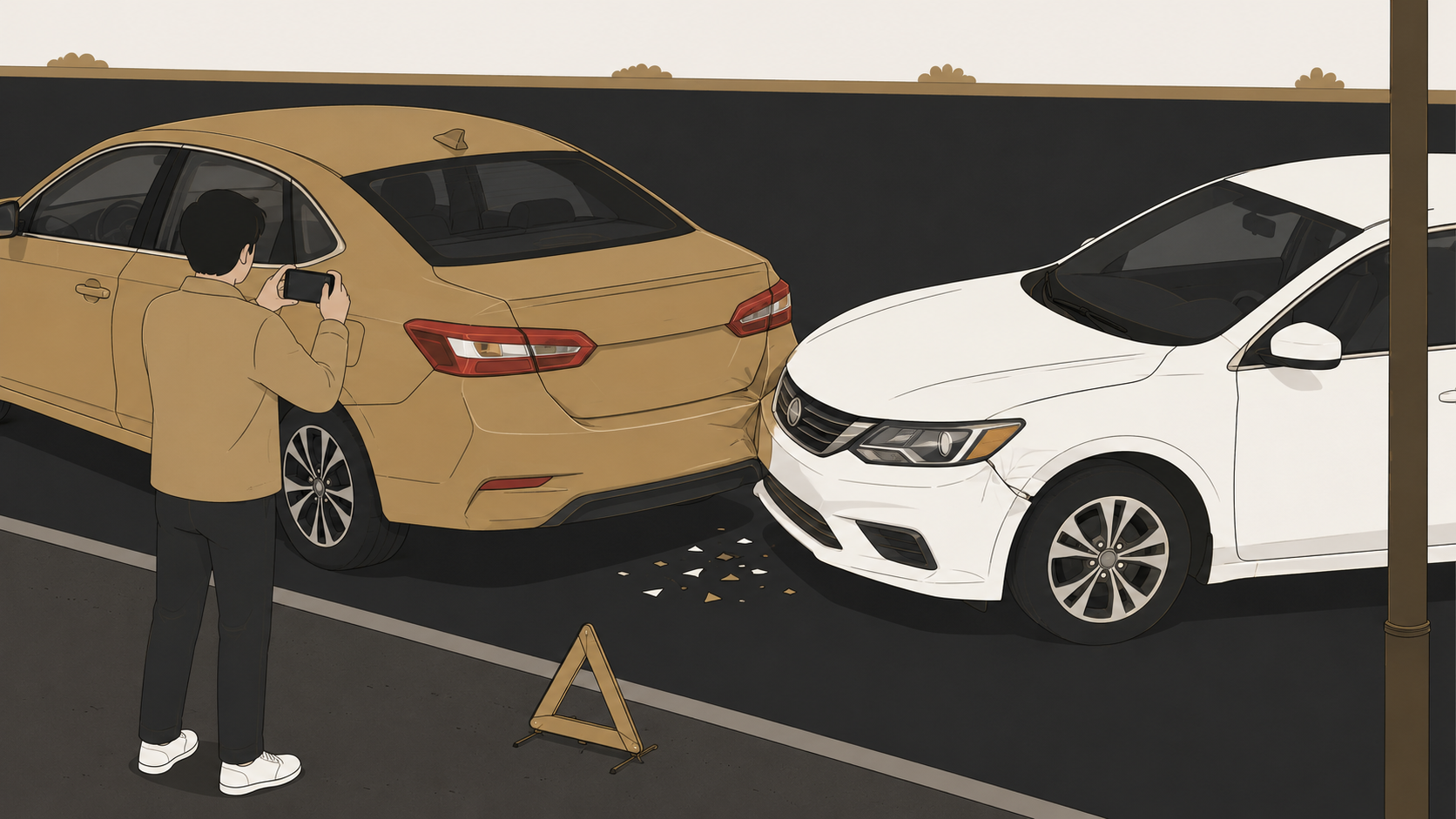
- Photograph the scene if possible
- Exchange identifying and insurance information
- Notify your insurance company
- Obtain a copy of the police report
Even in the shock of a fatal accident, preserving evidence at the scene can make a significant difference. In our experience handling a wrongful death case involving a speeding dump truck on Airline Highway, the electronic data from the truck’s on-board recorder was the key evidence. It proved the driver accelerated through a red light rather than attempting to stop, as the defense initially claimed. We retained experts to secure and analyze that data immediately after the crash.
How Does Insurance Coverage Affect a Wrongful Death Claim in Louisiana?
Louisiana’s minimum required auto liability limits are low:
- $15,000 for bodily injury or death to one person
- $30,000 per accident for two or more persons
- $25,000 for property damage
These minimums are almost always far below the financial impact of a fatality. Identifying all available coverage sources is one of the most important early steps.
Uninsured/Underinsured Motorist (UM/UIM) coverage is governed by La. R.S. 22:1295. The statute requires UM coverage at least equal to the bodily injury liability limits unless the insured specifically rejected or modified coverage using a prescribed form. UM coverage explicitly includes death resulting from covered injuries.
Mapping out every available insurance policy is one of the first things an experienced personal injury attorney will do. This includes the at-fault driver’s liability coverage, your loved one’s UM/UIM coverage, and any applicable commercial or umbrella policies.
How to File the Lawsuit in Louisiana
Identifying the Correct Defendants
In a fatal car accident, the at-fault driver is the most obvious defendant. But other parties may share liability depending on the facts:
- Employers, if the at-fault driver was acting in the course of employment. La. Civil Code art. 2320 holds employers answerable for damage caused by their employees in the exercise of their job functions.
- Government entities, if the crash involves a public vehicle or road-design defects. Claims against government defendants trigger special rules discussed below.
Where to File
Louisiana venue rules allow a tort action to be filed in the parish where the wrongful conduct occurred or where the damages were sustained. In car accident cases, this is typically the parish where the collision happened.
Drafting and Filing the Petition
A Louisiana civil case begins by filing a petition (Louisiana’s term for a complaint) with the appropriate court. The petition must include:
- Names and domiciles of all parties
- A clear statement of the causes of action and material facts
- A physical address and email address for service-related matters
- A prayer for relief (what you’re asking the court to award)
Can You Sue the Insurance Company Directly?
Louisiana historically allowed injured parties to sue liability insurers directly, but current law under La. R.S. 22:1269(B)(1) substantially restricts this. You generally cannot sue the insurer directly unless one of several specific exceptions applies, such as insolvency or bankruptcy of the insured, inability to serve the insured, or the insured being deceased.
Two additional procedural points: the insurer cannot be named in the case caption, and the court generally cannot disclose insurance coverage to the jury.
Special Rules for Claims Against Government Entities
If the at-fault party is a state agency, political subdivision, or government employee acting in the course of their duties, the Louisiana Governmental Claims Act applies.
Two provisions stand out:
Damage caps. Under La. R.S. 13:5106, total liability for wrongful death against a government entity cannot exceed $500,000, regardless of the number of claims or suits.
Special service requirements. Under R.S. 13:5107, you must serve the Louisiana attorney general and the relevant agency head. If service is not requested within the statutory timeframe, the action must be dismissed without prejudice as to the unserved public defendant. That dismissal can also eliminate prescription interruption for that defendant.
What Damages Can You Recover?
Wrongful Death Damages
Louisiana wrongful death damages compensate surviving family members for their own losses. Courts consider several factors, including:
- Loss of love and affection
- Loss of services the deceased provided
- Loss of financial support
- Medical expenses related to the fatal injury
- Funeral expenses
Survival Damages
Survival damages cover what the deceased person experienced between injury and death. Survivors step into the decedent’s shoes to recover damages like pre-death pain and suffering and medical costs incurred before death.
Exemplary (Punitive) Damages in Drunk Driving Cases
Louisiana generally does not allow punitive damages, but La. Civil Code art. 2315.4 creates an exception for intoxicated-driving cases. If the at-fault driver was intoxicated and showed wanton or reckless disregard for the safety of others, exemplary damages may be available on top of compensatory damages.
How Does Louisiana’s 51% Comparative Fault Bar Affect Wrongful Death Claims?
As of January 1, 2026, Louisiana applies a modified comparative fault standard under La. Civil Code art. 2323 (as amended by HB 431). If the person who was injured or killed is found to be 51% or more at fault, recovery is barred entirely. If fault is below 51%, damages are reduced proportionally.
Under the previous pure comparative fault system, a plaintiff could recover even if they were mostly at fault, just with reduced damages. That is no longer the case for accidents occurring on or after January 1, 2026.
This change makes early evidence preservation more important than ever. Scene documentation, witness statements, event data recorder information, and toxicology results can determine whether a case crosses that 51% threshold.
How Does Louisiana’s “No Pay, No Play” Rule Apply?
Louisiana’s compulsory insurance penalty under La. R.S. 32:866 can affect wrongful death claims if the deceased was driving without required liability insurance.
Under current law, an uninsured owner or operator cannot recover the first $100,000 of bodily injury damages and the first $100,000 of property damage. Exceptions include cases where the other driver was convicted of DWI, intentionally caused the accident, fled the scene, or was committing a felony.
Because wrongful death claims are brought by survivors but arise from the decedent’s accident, how this rule interacts with specific facts can be legally complex. This is something to evaluate early with an attorney.
Step-by-Step Filing Timeline
| Step | Action | Timing |
| 1 | Preserve evidence, secure crash report, document everything | Immediately |
| 2 | Identify correct claimants under arts. 2315.1 and 2315.2 | As soon as possible |
| 3 | Map all defendants and insurance coverage sources | Within first weeks |
| 4 | Obtain death certificate and medical records | Weeks 1-4 |
| 5 | Draft and file petition in proper venue | Before prescription deadline |
| 6 | Request service on all defendants | Within 90 days of filing |
What to Look for in a Wrongful Death Attorney
Not every attorney handles wrongful death cases the same way. A few things matter more than most:
Trial experience. A firm that prepares every case for trial, rather than banking on a quick settlement, will typically recover more. Insurance companies know which attorneys will actually go to court, and they adjust their offers accordingly.
Direct attorney involvement. In wrongful death cases especially, you want the attorney whose name is on the door managing your case, not a junior associate handling the work behind the scenes.
Track record with similar cases. Ask about specific wrongful death outcomes, not just general personal injury numbers. Results in comparable cases tell you more than any advertisement.
At our firm, wrongful death cases receive direct partner-level attention from start to finish. We prepare every case for full litigation. In one wrongful death matter, a different firm settled a similar case for $500,000 in state court. We took a comparable case to federal court and secured $3.5 million for the family. That difference comes down to preparation, experience, and willingness to take the case further when a fair settlement isn’t on the table.
Talk to a Wrongful Death Attorney About Your Case
If you’ve lost a family member due to someone else’s negligence in the Baton Rouge area, the legal process shouldn’t add to your burden. We offer a free consultation to evaluate your case and explain your options.Call Melancon, Rimes & Daquanno at (225) 303-0455 or visit our office at 6700 Jefferson Hwy (Building 6), Baton Rouge, LA 70806.